


Lines That Decide Elections. Gerrymander

Updated: May 9
By Alicia Raffinengo
Reporter Life News today
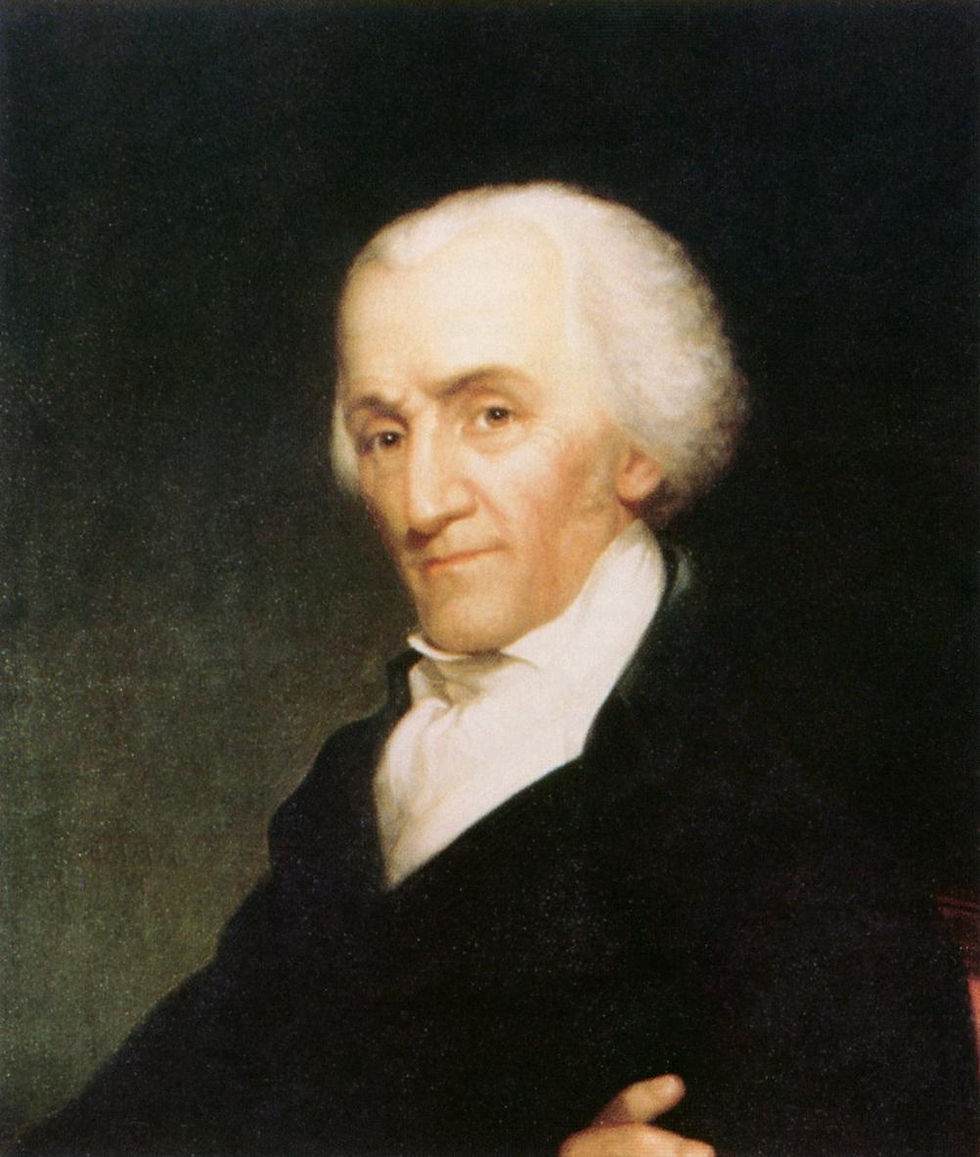
Gerrymandering is the practice of drawing voting district boundaries in a way that influences election outcomes, often giving one political party an advantage over another. It does not change how people vote, but it changes how those votes are grouped, which can determine who wins seats in government and how power is distributed for years at a time. The term dates back to 1812, when Elbridge Gerry approved a redistricting plan in Massachusetts that included a district so unusually shaped it was compared to a salamander. A newspaper combined his name with that image to create the term that is still used today, turning a single political moment into a lasting symbol of electoral strategy. While the name is tied to that event, the practice itself has continued to evolve and remains one of the most influential forces in modern elections.

The concept of manipulating district boundaries can be traced back to the early years of the United States, when political leaders were already searching for ways to strengthen their influence within a developing system. In the late 1700s, figures such as Patrick Henry attempted to draw districts that would weaken rivals like James Madison, showing that the strategy predates the term itself. These early efforts were not isolated, but part of a broader pattern of political competition as parties began to organize and define their power. As the country expanded and elections became more structured, the practice grew more deliberate and more visible. What began as rough political maneuvering developed into a central tool used to shape outcomes long before votes are ever cast.
Gerrymandering works through several core methods that focus entirely on how voters are distributed across districts rather than how they vote. One of the most common techniques is packing, which places as many opposing voters as possible into a small number of districts so they win those districts by large margins but lose influence elsewhere. Another method is cracking, which spreads those same voters across multiple districts so they cannot form a majority in any one area, effectively weakening their impact across the map. These strategies can produce outcomes where a party wins more seats despite receiving fewer total votes statewide, a result that often drives public debate. In modern practice, these techniques are reinforced by detailed voter data, demographic analysis, and computer modeling that allow mapmakers to test thousands of possible configurations and select the one that delivers the strongest advantage.
Redistricting, the formal process of drawing district boundaries, is required every 10 years following the United States Census to reflect population changes and maintain equal representation. While that timeline has not changed, the process itself has become more dynamic because of legal challenges, political shifts, and advances in technology. Courts can intervene at any point in the decade and require maps to be redrawn if they find violations related to unequal population or discrimination. In some cases, states have occasionally pursued mid-decade redistricting, often tied to political shifts or litigation rather than routine practice. As a result, what was once viewed as a once every decade task has become an ongoing process that can influence elections repeatedly within the same cycle.
Control of redistricting remains primarily at the state level, where legislatures typically draw district maps and governors may approve or reject them. At the federal level, the United States Congress sets broad legal standards, and the U.S. Supreme Court defines constitutional limits that apply nationwide. Federal law, including the Voting Rights Act of 1965, continues to restrict racial discrimination, though federal oversight has been reduced in some areas following decisions such as Shelby County v. Holder. Federal courts do not adjudicate partisan gerrymandering claims following Rucho v. Common Cause, leaving those disputes largely to state courts and laws. Over time, these rulings have shifted where and how challenges to district maps are resolved.
Regulation of gerrymandering has shifted as legal interpretations and political realities have changed. In the 1960s, court rulings such as Baker v. Carr and Reynolds v. Sims established that districts must have roughly equal populations, reinforcing the principle of equal representation. The Voting Rights Act expanded federal oversight and sought to protect minority voters from being diluted through district design. More recent decisions have limited the ability of federal courts to address partisan gerrymandering, increasing the importance of state level systems. At the same time, advances in technology have made it easier to design highly precise district maps, increasing both the effectiveness of gerrymandering and the scrutiny it receives. The combination of reduced federal involvement and more powerful tools has intensified the debate over fairness in elections.

Virginia offers a clear example of how states have attempted to change the process without changing the timeline. In 2020, voters approved a constitutional amendment to create the Virginia Redistricting Commission, shifting responsibility from the legislature to a bipartisan group that includes lawmakers and citizens. The goal was to reduce partisan influence and increase transparency, responding to concerns that elected officials were shaping districts to protect their own positions. The change did not alter the requirement to redraw maps every 10 years, but it did change how those maps are created and reviewed. When the commission failed to reach agreement, the Supreme Court of Virginia assumed control and finalized the maps, underscoring the continuing role of courts in resolving disputes over representation.
Across the country, redistricting is still being fought in real time, with major states taking very different approaches that could shape upcoming elections. In Virginia, voters approved a 2026 amendment allowing mid-decade redistricting that could shift several congressional seats, but a judge blocked certification of the results, and the case is now being reviewed by the Supreme Court of Virginia, leaving the outcome uncertain. In Florida, lawmakers have pushed forward new maps designed to reshape multiple districts and potentially shift control of seats, with legal challenges expected as critics argue the changes are politically driven. In California, an independent commission continues to oversee district boundaries, offering a contrast to states where legislatures control the process, though debates remain about whether maps fully reflect communities and political balance. Together, these battles show that redistricting is no longer confined to a once-a-decade process but has become an ongoing national fight that can alter representation and influence control of Congress in real time.
Gerrymandering remains one of the most powerful forces shaping elections in the United States because it operates before a single vote is cast. Although the rules governing it have evolved, the central issue has not changed, which is whether district lines reflect voters fairly or are used to influence outcomes. The interaction between state control, federal law, court decisions, and technological advancement has made redistricting one of the most complex and closely watched processes in the political system. As debates continue across the country, the question of who draws the lines, how they are drawn and when will continue to define political power for years at a time. In modern elections, the map is not just a reflection of voters, it is often a preview of the results.


Comments