


Supreme Court lets US Resume Deportations to Third Countries

9
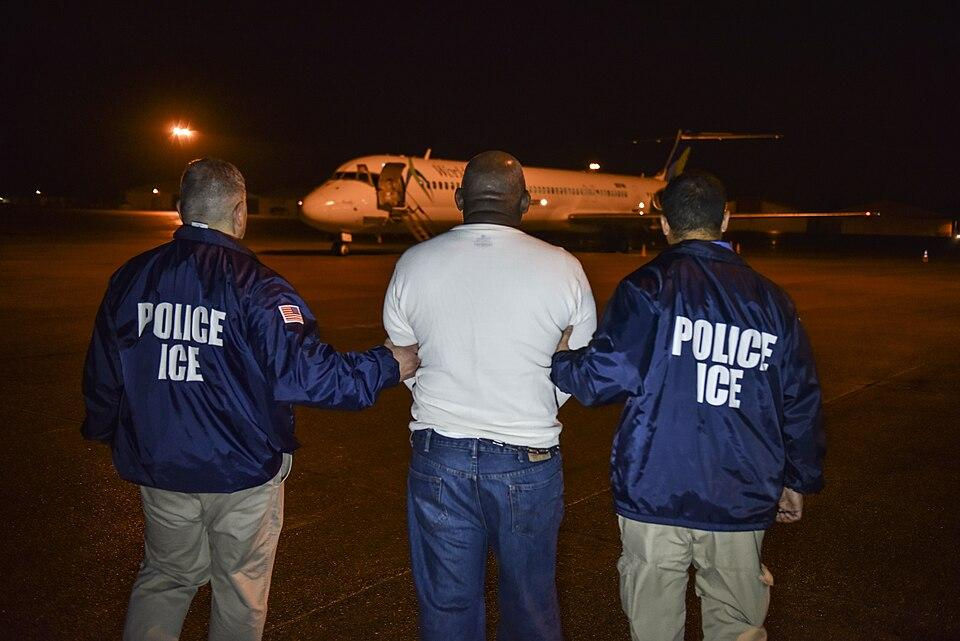
The Supreme Court will hear arguments Dec. 9 over the Trump administration’s procedures for deporting immigrants to countries other than their own, a practice that has affected nearly 28,000 people between January 2025 and early August 2026, according to Human Rights Watch. On Sept. 29, the court granted a request from the Department of Homeland Security (DHS) to pause a federal judge’s ruling that the department’s deportation rules were unlawful. Until the case is decided, DHS can resume deportations under those rules. The pause does not decide whether the rules are legal. The case will determine what protections immigrants must receive before being sent to a country where they may face persecution or torture.
The dispute centers on what are known as third-country deportations, in which immigrants are removed to countries other than their own or those identified in their removal proceedings. Judge Brian Murphy of the federal district court in Massachusetts ruled Feb. 25 that immigrants must get notice and a chance to argue they would face persecution or torture before removal to a new country. An appeals court paused that ruling while the government appealed, then largely upheld it Sept. 18, and the lower court’s judgment subsequently took effect, stopping removals under the challenged rules. The Justice Department filed the government’s request with the Supreme Court six days later. The Supreme Court told the sides to address whether the lower courts had authority to hear the case, whether the judge could grant relief to a whole class and whether the rules are unlawful. It granted similar relief in June 2025, when it paused an earlier injunction in the same case. The central disagreement is not whether third-country deportations are always prohibited, but whether the government must give immigrants a meaningful opportunity to challenge removal to a particular country.
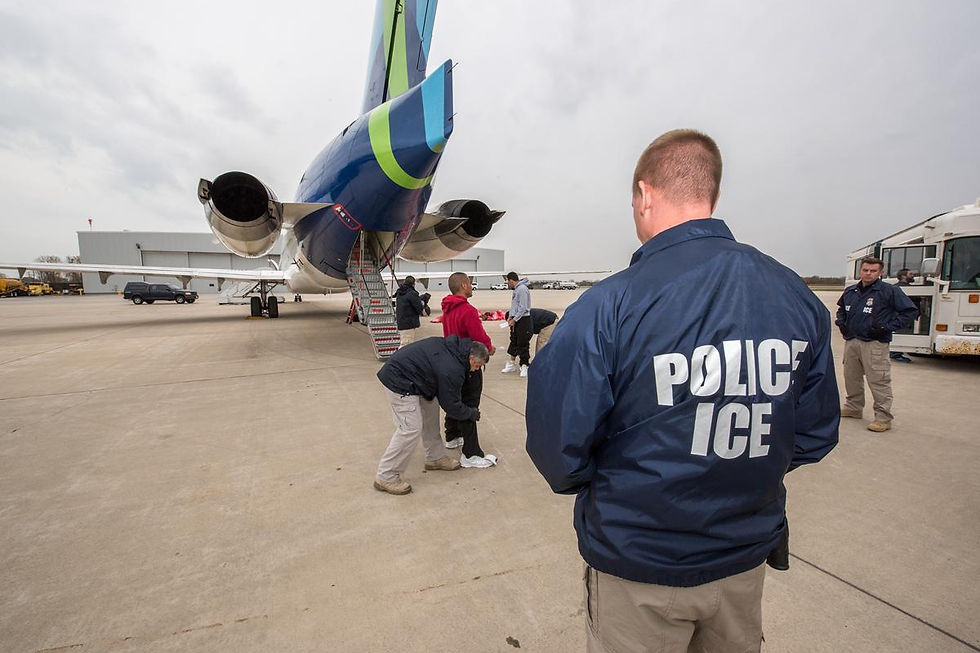
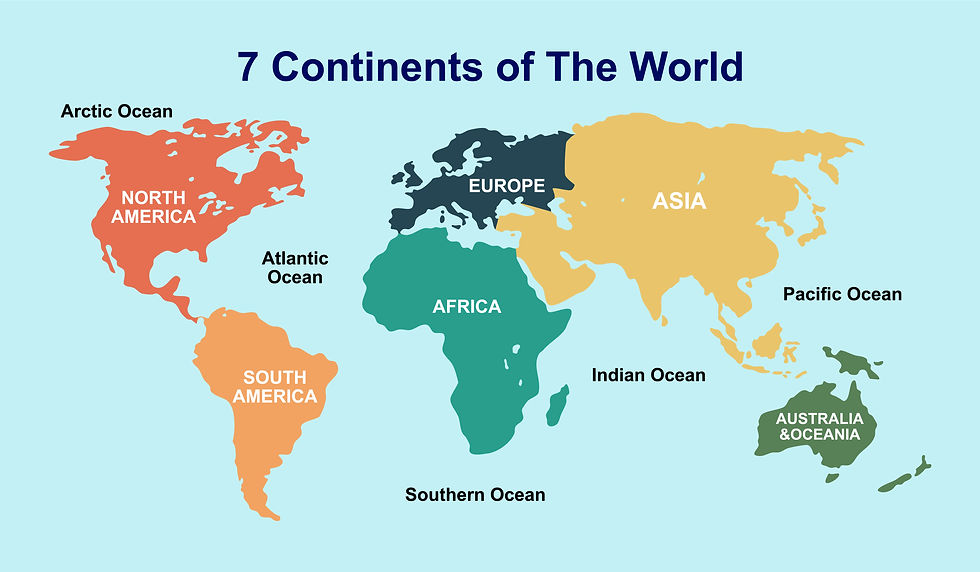
Human Rights Watch based its count on Immigration and Customs Enforcement data. Between Jan. 20, 2025, and Aug. 5, 2026, nearly 28,000 people were deported to more than 50 countries other than their countries of citizenship or habitual residence. Immigrants came from many countries, not only Latin America, and most went somewhere other than Africa. Rwanda, South Sudan, Eswatini, Ghana, Equatorial Guinea, Cameroon and Congo have received or agreed to receive third-country nationals, though an agreement does not mean transfers have occurred. Deportations to African countries rose from 103 in the preceding comparable period to 536 between Jan. 20, 2025, and Aug. 5, 2026.
The legal framework predates the current administration. Congress set the framework for removing people to alternative countries in the Illegal Immigration Reform and Immigrant Responsibility Act, which President Bill Clinton signed Sept. 30, 1996. In his statement that day on the spending bill that carried the law, Clinton called it “landmark immigration reform legislation” and said it was “cracking down on illegal immigration at the border, in the workplace, and in the criminal justice system.” In February 2025, DHS issued internal guidance identifying categories of people with final removal orders to be considered for third-country removals. Federal law also restricts deportation to countries where persecution or torture is likely, and whether the government’s procedures satisfy that standard is central to the litigation. The question now before the Supreme Court is how those protections must be applied when the destination is not the immigrant’s home country.
The federal government said removals to third countries are an essential tool for deporting people whose home countries refuse to take them back, including “some of the worst criminal aliens,” in the words of its Supreme Court filing. The filing said the lower court’s ruling forced DHS to cancel a flight carrying 70 people to three countries. DHS General Counsel James Percival told Fox News Digital: “If the person is a child rapist and serves 20 years, we have two choices: Find a third country or let the child rapist go live in an American community.” Under the government’s guidance, DHS may remove people without further procedures when a country gives credible assurances that they will not be persecuted or tortured, and otherwise gives written notice and generally waits at least 24 hours. The filing cited 103 removals of people whose home countries refused to take them back or who posed public-safety concerns, including 23 murderers. The administration argues that requiring additional hearings could delay deportations even when receiving governments have promised to protect those transferred.
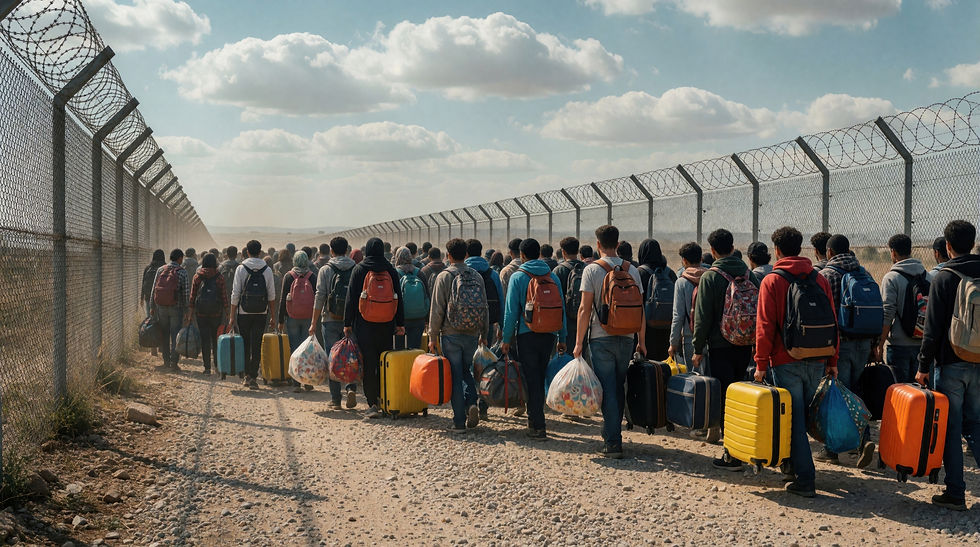
The immigrants who brought the case, represented by the Northwest Immigrant Rights Project and the National Immigration Litigation Alliance, opposed the request Sept. 28. Human Rights Watch reported that deportees got little or no warning. Tesfay T., a 35-year-old Ethiopian man sent to Cameroon, told the group: “Even before we got on the plane, we asked where we were going, and they told us, ‘You’ll find out when you arrive.’” The 1st U.S. Circuit Court of Appeals wrote that “the statute and regulations prescribe hearing-related procedures for fear-of-persecution claims with no exception for third-country removals.” Justices Sonia Sotomayor, Elena Kagan and Ketanji Brown Jackson said they would have denied the stay, as they did in June 2025. Sotomayor wrote then that “the Government thus openly flouted two court orders, including the one from which it now seeks relief.” The Sept. 29 order gave no reasons for the dissent. For the challengers, advance notice is essential because a person may face dangers in a third country that were never considered during the original immigration proceedings.
Individual deportation cases illustrate the consequences of sending immigrants to countries where they have no citizenship or established ties. The U.S. deported Jesús Muñoz Gutiérrez, a Mexican citizen, to South Sudan in July 2025. DHS said a court sentenced him to life in prison for second-degree murder. He told journalists in Juba: “I finished my time in the United States, and they were supposed to return me to Mexico.” He added: “Instead, they wrongfully sent me to South Sudan.” He also said that “while I was here they treated me well.” Mexican officials worked through diplomatic channels for about two months to arrange his return, and South Sudan announced Sept. 6, 2025, that it had repatriated him. His case shows how a deportation can require additional diplomatic negotiations even when the immigrant’s country of citizenship is known.
Other cases have raised questions about detention and access to legal representation after deportation. Eswatini authorities held four men the U.S. deported in July 2025, citizens of Cuba, Laos, Vietnam and Yemen, at a maximum-security prison and denied them in-person meetings with a lawyer for nine months. Local attorney Sibusiso Magnificent Nhlabatsi sought access on behalf of the men’s American lawyers. The authorities argued that the men did not want to meet him and had no right to counsel because Eswatini had not charged them with a crime. Eswatini’s Supreme Court rejected those arguments and ruled April 9, 2026, that the meetings could go ahead. Vongai Chikwanda, Amnesty International’s deputy regional director for East and Southern Africa, called the ruling “an important step towards upholding the right to access a lawyer.” She said Amnesty remains concerned the men “continue to be arbitrarily detained.” Government spokesperson Thabile Mdluli told The Associated Press that “the judgment is still new, and the Government has not yet convened to consider any potential future actions, if necessary.”
In Congo, the controversy has centered on whether deportees had a genuine choice about returning to their home countries. Seven women and eight men from Colombia, Peru and Ecuador arrived in Kinshasa, Democratic Republic of Congo, on April 17, 2026, the first group sent there under the U.S. scheme. A federal court had found they were likely to face persecution at home, their lawyer, Alma David, said. A Colombian woman told NPR: “We don’t know what will happen to us.” By early June, eight of the 15 had gone home, David said, and the International Organization for Migration said its return program is “strictly voluntary and based on free, prior and informed consent.” David said the migrants “likely felt backed into a corner because no viable alternative was presented to them.” The case raises questions about whether returning home can be considered voluntary when deportees have few alternatives in the receiving country.
Allegations of police violence have also emerged in Equatorial Guinea. Police in Equatorial Guinea arrested Ahmed Soliman, an Egyptian, and Samson Birhane, an Eritrean, on Sept. 11, 2026, in the capital, Malabo, their lawyers said. The U.S. had deported both men to the country, and they had stayed at a hotel. The lawyers alleged that officers brought the men back to the hotel with bags over their heads and beat them in front of other detainees. Isabella Mosselmans of the Global Litigation Council, part of the coalition representing the men, said: “Over the past months, we have observed escalating cases of police violence.” In a Sept. 18 statement, Amnesty International said it believes police targeted the men “in reprisal.” The Associated Press report included no response from Equatorial Guinea or U.S. officials. Amnesty said Oct. 22 that police released both men Oct. 8. Their experience illustrates the difficulty of ensuring protection after deportees leave U.S. jurisdiction.
Beyond the legal challenges and individual cases, the program has drawn scrutiny over its financial cost. A February report by Democratic minority staff on the Senate Foreign Relations Committee found at least $32.3 million in payments to five governments, including $7.5 million each to Rwanda, Equatorial Guinea and Palau. The report estimated total costs at about $40 million through January. A September report citing internal State Department records said the government had earmarked $410 million for the program, including $81 million for signatory governments. Earmarked money is not spent money, and no complete public accounting exists. The difference between money promised, formally committed and actually spent makes the program’s full cost difficult to establish.
The payments vary widely, and so does what the U.S. got for them. The Senate report lists $7.5 million each for Rwanda, Equatorial Guinea and Palau, $5.1 million for Eswatini and at least $4.76 million for El Salvador, and it separately cites $9.5 million in “deportation assistance” for Costa Rica. By January, Rwanda had received seven people, Eswatini 15 and Equatorial Guinea 29, and Palau had received none. The report’s estimate of the cost per person, counting payments and flights, ran from about $20,755 in El Salvador to $1.1 million in Rwanda, which agreed to take up to 250 people. The State Department has defended the arrangements as part of the effort to end illegal immigration. Those estimates reflect different agreements and numbers of deportees, making direct comparisons between countries difficult.

The totals are likely low. The report put spending through January at about $40 million: $32.3 million in payments, an estimated $7.2 million for flights and $307,000 to house deportees at a U.S. base in Djibouti. It called that a minimum because it leaves out repatriation, hotels and aid to groups serving deportees. The Equatorial Guinea figure shows the gaps: Senate staff described the $7.5 million as a payment, but the federal award record on USAspending.gov lists it as obligated with no reported outlays, meaning committed but not shown as spent. The report came from minority staff and is not an audit, so what taxpayers have paid in total is not yet known. Without a complete public accounting, the financial consequences remain another unresolved aspect of the program.
The spending questions have prompted demands for federal oversight. In an April 7 letter, Sens. Elizabeth Warren, D-Mass., and Chris Van Hollen, D-Md., and Reps. Delia Ramirez, D-Ill., and Troy Carter, D-La., asked the inspectors general of the Homeland Security and State departments to investigate. They wrote that “U.S. law imposes strict due process requirements before an individual can be deported to a third country,” and asked for “a breakdown of which appropriations accounts have been used to fund the third-country removal system.” The letter cited allegations of inadequate notice and possible violations of legal protections, which are not findings. It is not clear whether an inspector general has completed an investigation. The lawmakers’ request connects concerns about the treatment of deportees with questions about how public funds are being used.
The Supreme Court’s December hearing will bring the dispute over those legal protections back to the forefront. The case before the Supreme Court concerns the procedures the government must follow, not whether it may carry out third-country removals at all. The Sept. 29 stay remains in effect until the court sends down its judgment. The challengers’ brief is due Nov. 16, and the government’s reply is due Dec. 1. Arguments are set for Dec. 9. The justices must decide whether the government’s procedures provide the protections required by federal law and whether the lower courts had authority to intervene. For immigrants facing removal to unfamiliar countries, the ruling could determine whether they receive an opportunity to challenge the dangers awaiting them before they are deported.
Alicia Raffinengo, Reporter
Life News Today


Comments