


Diella Albania’s AI Minister of State
Sabrina Pineda
Reporter, Life News Today
In September 2025, Albania became the first country in the world to appoint an artificial intelligence system to a cabinet-level ministerial role. The system, called Diella, which means "sun" in Albanian, went from being a virtual assistant for citizens to holding the position of Minister of State for Artificial Intelligence, with a mandate focused on the digitalization of the State, the supervision of public procurement and the fight against corruption. Although the announcement generated headlines around the world, Diella's true scope is more complex than the idea of an AI ruling a country. In practice, it is an artificial intelligence system designed to assist administrative and analytical processes, while legal decisions and political responsibility remain in the hands of human officials.
Diella was officially launched on January 19, 2025, as a virtual assistant for the government platform e-Albania, the portal through which citizens carry out most of their administrative procedures. Its initial purpose was to simplify the relationship between the population and the State through natural language interaction, voice and text assistance, guidance for completing procedures, the issuance of digital documents and the reduction of waiting times. Within a few months, it registered about 972,000 interactions and tens of thousands of documents issued with its digital seal, figures the government cited as evidence of the system's acceptance.
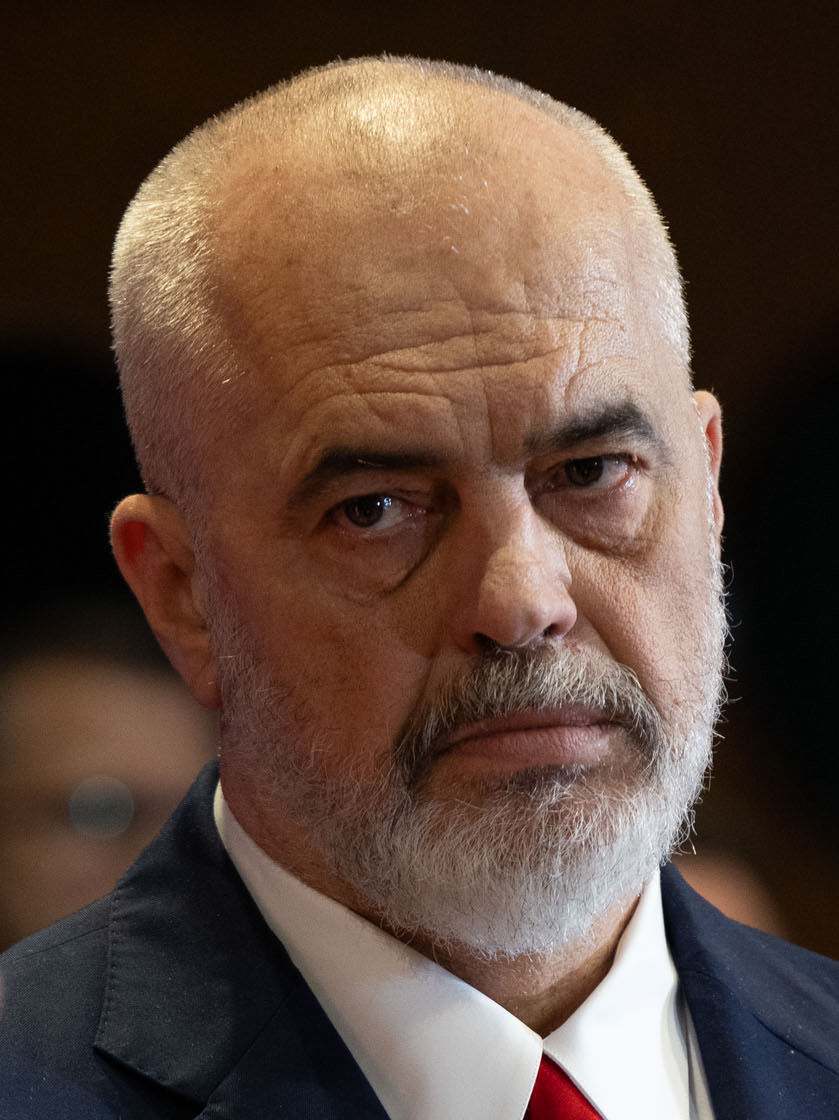
It was Prime Minister Edi Rama who decided to considerably expand Diella's role. In September 2025, he announced that Diella would no longer serve only as an assistant for citizens but would become the Minister of State for Artificial Intelligence, leading a specialized human team. The announcement carried a strong symbolic message, demonstrating Albania's intention to become one of the pioneering countries in incorporating artificial intelligence into public administration. According to the government, Diella's responsibilities extend well beyond citizen assistance.

Among the project's principal objectives are:
Fight corruption and reduce opportunities for bribery, political favoritism, manipulation of public tenders and non-transparent processes.
Completely transform public administration. Diella seeks to automate numerous processes such as document review, file classification, form validation, request tracking and responses to citizen inquiries that are currently handled by officials, allowing public employees to spend more time on complex tasks while the AI performs repetitive work.
Digitize state processes. The government intends to gradually phase out the use of paper throughout public administration.
Improve transparency. One of the central arguments behind the project is that an AI system can maintain a complete history of each technical decision, allowing every action performed by the system to be reviewed later through digital records.
Promote European integration. Albania's accession to the European Union requires continued progress in transparency, institutional efficiency, the reduction of corruption and administrative modernization. The government presents Diella as a tool to accelerate these reforms and move the country closer to European standards.
Although Diella is popularly described as a "minister," its functions are primarily technical. It can process large volumes of information to detect inefficiencies, identify patterns, develop performance indicators and support administrative decision-making, while final authority remains with human officials. In a public announcement, the government explained that the goal is to move from decisions based primarily on intuition to decisions supported by evidence and data. The system also seeks to reduce response times through automatic classification, document validation, report generation and file monitoring.

There has been some media confusion regarding Diella's capabilities. It does not govern the country, pass laws, vote in Parliament, replace the prime minister, make political decisions on its own initiative or possess an independent legal identity. It functions as a support system for public administration rather than as a sovereign authority. Legal and political responsibility remains with human officials and ministers.
The initiative has generated mixed reactions inside and outside Albania. Supporters argue that it can reduce bureaucracy, accelerate public services, lessen the influence of personal interests and position Albania as a global laboratory for government innovation. Critics counter that corruption also depends on institutional and human factors that technology alone cannot eliminate.

Diella represents one of the most ambitious experiments in integrating artificial intelligence into public administration. Rather than replacing political leaders, its role is to automate processes, analyze large volumes of information and support decision-making using consistent and traceable criteria. The long-term success of the project will depend on whether it can improve efficiency and transparency while preserving essential democratic principles such as human oversight, accountability and the protection of citizens' rights. If successful, the initiative could also serve as a model for other governments seeking to modernize public administration through the responsible use of artificial intelligence while maintaining democratic oversight and public trust.


Comments