


Experimental Eye Drops Could Protect Vision in People With Diabetes

A team of scientists at the National Autonomous University of Mexico (UNAM) is developing eye drops that could help prevent vision loss caused by diabetes. The experimental treatment uses a molecule derived from vasoinhibin, a substance naturally produced by the body that can prevent the abnormal growth of blood vessels. Researchers hope to offer a less invasive alternative to the injections currently received by many patients with retinal diseases. Although the results obtained so far are promising, the medication is still under development and has not been approved for use in humans.
Diabetes is a disease in which blood glucose, or blood sugar, levels remain too high. Glucose comes from food and provides energy to cells, while a hormone called insulin helps glucose enter them. In type 1 diabetes, the body produces little or no insulin; in type 2 diabetes, the body does not use insulin properly and, over time, may produce insufficient amounts. When glucose accumulates in the blood over long periods, it can damage different organs, including the eyes. One of its most serious complications is diabetic retinopathy, a disease that affects the small blood vessels of the retina, the light-sensitive tissue at the back of the eye.
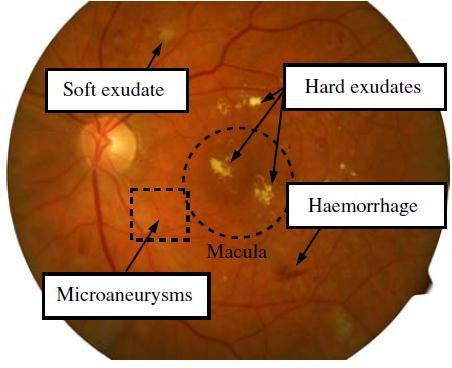
The damage occurs through several mechanisms. Excess glucose can weaken the walls of blood vessels, causing them to swell and leak blood or fluid into the retina. When circulation is disrupted, some areas receive less oxygen, and the body responds by forming new blood vessels that are often abnormal and fragile. These changes can cause bleeding, scarring, retinal detachment and progressive vision loss. Diabetic macular edema can also develop when fluid accumulates in the macula, the region of the retina responsible for central vision and activities such as reading or recognizing faces. The disease can progress without noticeable symptoms during its early stages.
Diabetes also increases the risk of cataracts and certain types of glaucoma, although these conditions develop through different mechanisms. According to the U.S. National Eye Institute, approximately one in 15 people with diabetes will develop diabetic macular edema over time. Early detection is essential because some abnormalities can be treated before they cause significant damage. For this reason, people with diabetes are advised to receive regular eye examinations and maintain appropriate control of blood glucose, blood pressure and cholesterol. These measures help reduce the risk of complications, although they do not completely eliminate the possibility of developing retinal diseases.

Treatments are currently available that can slow vision deterioration and, in certain cases, improve eyesight. These include injections into the eye of medications that block vascular endothelial growth factor, known as VEGF, a protein associated with abnormal blood vessel formation and fluid leakage. Laser treatments, corticosteroids and surgery are also used, depending on the severity of the disease. Injections may need to be repeated over months or years, creating discomfort, expenses and difficulties for some patients. Although these are established and effective treatments, not everyone responds in the same way, so the search for alternatives continues.
At UNAM's Institute of Neurobiology in Juriquilla, Querétaro, the team led by scientist Carmen Clapp has spent more than 30 years investigating the properties of vasoinhibin. This molecule can limit the formation of new blood vessels, a process known as angiogenesis, and reduce their permeability. However, turning it into a medication presented a challenge because of its size and complexity. Researchers identified a small sequence of three amino acids responsible for a key part of its biological activity, a discovery that made it possible to develop smaller compounds for studying potential therapeutic applications.

One of these experimental compounds, known as VIAN-c4551, was evaluated in research published in 2025. Scientists found that, when administered as eye drops, it could reach tissues inside the eyes of rabbits and reduce abnormal fluid leakage in diabetic models involving rats and mice. These results are significant because medications applied to the surface of the eye generally have difficulty reaching the retina in sufficient concentrations. However, the experiments do not yet demonstrate that the treatment is safe or effective in human patients. They also do not establish that the drops could replace all injections currently used.
Scientific progress continued with a study published in January 2026 in the Journal of Biological Chemistry, led by Magdalena Zamora and conducted with Carmen Clapp, Gonzalo Martínez de la Escalera and Juan Pablo Robles. The team identified a protein on the cell surface, called integrin alpha 5 beta 1, that plays a role in vasoinhibin's effects on blood vessels. This discovery helps explain how the molecule can limit the formation of abnormal blood vessels and reduce fluid leakage. Understanding its mechanism of action can guide further research and improve the design of potential medications, although their effects and risks must still be carefully evaluated.

The development of these eye drops represents an example of how basic scientific research can lead to a potential medical application. Before the treatment can advance toward clinical use, researchers must complete the necessary preclinical evaluations and conduct human studies to determine its safety, dosage and effectiveness. They will also need to establish whether the benefits observed in animals can be reproduced in patients with diabetic retinopathy or diabetic macular edema. The project offers an encouraging possibility for treating diseases that affect the independence and quality of life of millions of people. While research continues, regular eye examinations and available treatments remain the primary tools for protecting the vision of people living with diabetes.
Viviana Cetola
Life News Today



Comments