


Data Centers, Resistance is Futile
- Alexander Fernandez

- Mar 26
- 6 min read
Updated: Apr 18
By Alexander Fernandez
Life News Today Reporter
Northern Virginia’s landscape is filled with data centers, the large windowless buildings that house the servers powering the internet. They rise along highways, near neighborhoods and across land that, until recently, defined much of the region’s countryside, even as most people who pass them have little reason to know what happens inside. What looks from the road like another concrete industrial building now supports the digital systems behind communication, commerce, cloud computing and data storage. The region now holds the world’s largest concentration of data centers. A 2024 report from the Virginia Joint Legislative Audit and Review Commission found Northern Virginia holds about 13% of global operational capacity and roughly one-quarter of the Americas’ capacity, with Loudoun, Prince William and Fairfax counties accounting for about 80% of Virginia’s industry. In Loudoun County alone, economic development materials say 53.3 million square feet of data center space are operating or under development, the industry and related businesses support more than 15,000 jobs, and there has not been a single day without data center construction in the county in more than 14 years.

A fiber test engineer who works in Northern Virginia data centers, interviewed by LNT on March 18, 2026, and who requested to be identified as “Michael,” said many people still do not understand what those buildings do. “They don’t realize everything depends on data centers, cloud, internet, everything. Because of the cloud, everything is now in data centers. Whatever service any company has is in the data center,” he said. His description captured the central tension of the story: buildings that can look anonymous from the outside now support systems people depend on every day, without seeing where the computing power sits. Some technology companies operate their own cloud sites, while infrastructure firms develop campuses and lease power, space, and connectivity to customers. Public materials identify Amazon Web Services, Google, Digital Realty, Equinix, QTS and CloudHQ as major operators in the region. Google says it operates data centers in Loudoun and Prince William counties, while Digital Realty says its Ashburn campus offers 500 megawatts of power capacity. Loudoun County land records show Amazon Data Services purchased George Washington University’s Virginia Science and Technology campus in Ashburn for about $427 million, with the deed allowing a data or information technology center on the site. Property filings also show SDC Capital Partners acquired 97 acres in Leesburg for about $615 million, land already zoned for five data centers. In Fairfax County, officials scheduled a March 17, 2026, public hearing on the proposed sale of about 41.7 acres at 3721 Stonecroft Boulevard to SCG Global Holdings for possible data center development.
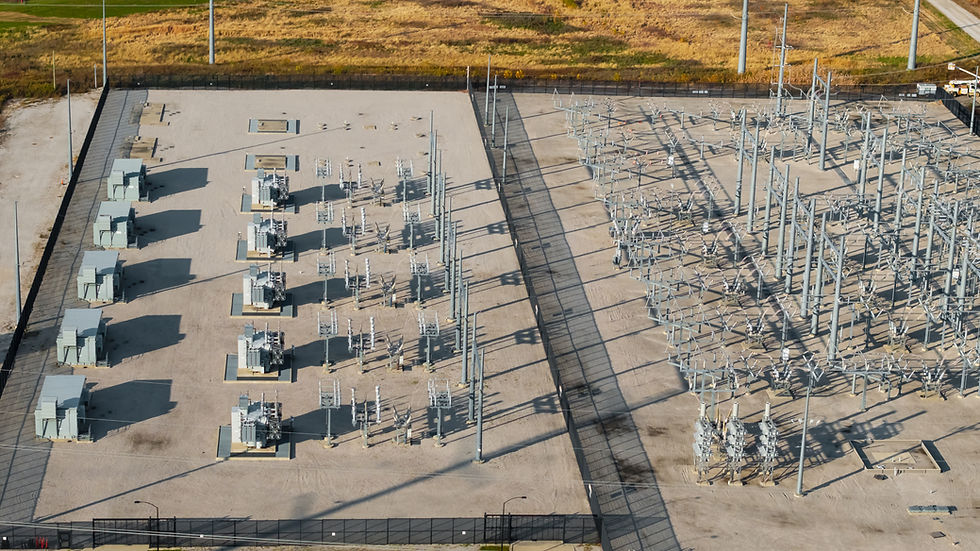
The physical footprint behind that expansion is industrial. JLARC described data center construction as requiring site clearing, grading, structural steel frames, reinforced concrete buildings, high-voltage electrical systems, cooling equipment, conduit, piping and backup generators. Some campuses are designed to require 200 megawatts or more of electrical capacity.
Michael said that scale is difficult to grasp until you step inside. “It’s huge, all those servers, all the racks. Yeah, like a Costco, if you remove everything, it’s all rows. That’s why they call it a server farm,” he said.

The demand created by those buildings is no longer abstract in Virginia. JLARC estimated that the state’s data centers consume about 5,050 megawatts of electricity, roughly equal to the power used by about 2 million Virginia households. Nationally, the United States Department of Energy reported in December 2024 that data center electricity use rose from 58 terawatt-hours in 2014 to 176 terawatt-hours in 2023, enough to power about 16 million homes for a year. Federal researchers projected that figure could climb sharply again by 2028 as large computing centers expand. The United States Energy Information Administration separately said overall electricity demand is expected to keep rising as those facilities grow. As those facilities use more power, utilities have to build more generators and expand the grid to keep up, and those costs can reach customers. JLARC found that for a typical Dominion Energy household, monthly electric bills could rise by about $14 to $37 by 2040, depending on how quickly data center demand grows.
In Northern Virginia, pressure has already forced local governments to reconsider how much industrial development nearby roads, neighborhoods and power systems can absorb. JLARC found that Fairfax, Loudoun and Prince William counties updated their data center policies after 2019 as rapid expansion raised disputes over land use, noise and electric infrastructure capacity. Fairfax County adopted a zoning ordinance amendment in 2024 that tightened where developers may place data centers and imposed stricter setback, building design and compatibility standards for nearby residential areas. A first-half 2025 report from CBRE Group Inc. found Northern Virginia remained the country’s dominant data center market, adding 538.6 megawatts of leased capacity in the first half of 2025 while developers increased active construction projects to about 2,078 megawatts. Across major United States markets, CBRE reported about 8,155 megawatts of total data center power capacity, roughly comparable to the electricity output of eight large nuclear power plants. Those numbers point not just to market growth, but to the physical systems needed to keep digital infrastructure running when the grid fails.

Data centres operate on grid electricity during normal conditions and rely on diesel generators during outages or scheduled testing, but fuel consumption rises sharply once those systems are under load. A startup requires relatively little fuel compared with overall demand, limited to bringing generators online. Caterpillar Inc., a United States-based manufacturer of industrial equipment and diesel generators, lists fuel consumption for a 2-megawatt standby diesel generator at 145.6 gallons per hour at full power. Scaled across a large campus with enough backup power to serve tens of thousands of homes, that rate equates to about 7,000 gallons of fuel per hour, or roughly 175,000 gallons over 24 hours, if generators ran continuously. Fuel use at that level reflects a single large data center campus operating at full capacity. Michael said workers inside the industry often understand that scale in practical rather than technical terms. “There’s a hot aisle and a cold aisle. Cold air comes in, hot air gets pulled out. If it gets hot, the fans work harder. Big fans run for hours,” he said. Michael also said the difference between older facilities and newer campuses was obvious from experience. “The previous ones, like in the ’90s, 1995, 1996, or 2000, were smaller. Maybe 10 rows. But recently, they became big. Because of the cloud, everything is in data centers now,”. His description matched the broader timeline. Large-scale data center development accelerated in the late 1990s as the commercial internet expanded and companies needed secure facilities to house servers connected to major fiber networks. During the following decade, state governments began creating tax incentives to attract those facilities. Virginia enacted a retail sales and use tax exemption for qualifying data center equipment effective January 1, 2009. Texas and Arizona adopted comparable exemptions in 2013. Georgia and Missouri followed with similar programs in 2018, and Michigan expanded its enterprise data center incentive framework in 2024.

A 2025 analysis from McKinsey & Company estimated that meeting global data center demand through 2030 could require about $6.7 trillion in capital spending, including roughly $5.2 trillion for artificial intelligence computing infrastructure. The White House said in January that a project known as Stargate plans to invest $500 billion over four years to build as many as 20 large artificial intelligence data centers in the United States, beginning with an initial $100 billion project in Texas. States continue competing for those projects through tax incentives. A policy survey from the National Conference of State Legislatures found that at least 37 states offer incentives such as sales tax exemptions or property tax abatements for data center investment. In Virginia, lawmakers are debating whether to end the state’s retail sales and use tax exemption for qualifying data center equipment, a program that fiscal documents estimate costs the state about $1.6 billion in fiscal year 2025. Minnesota has already removed a sales tax exemption on electricity purchases for large data centers and increased oversight of energy and water use. Lawmakers in Washington state are considering legislation that would preserve incentives for new facilities but remove them for existing sites that replace or upgrade equipment.
A May 2025 White House fact sheet said a United States-United Arab Emirates artificial intelligence cooperation framework includes a UAE commitment to invest in, build, or finance data centers in the United States that are at least as large and powerful as the largest facilities currently operating in the UAE. The White House said the agreement is part of broader technology cooperation between the two countries involving artificial intelligence infrastructure and other advanced computing systems. As more states reconsider tax incentives, electricity demand, water use and land-use rules governing data center development, Loudoun and Fairfax counties now provide a detailed public record of how the industry is reshaping land use, power planning and public policy in the region that hosts the world’s largest concentration of data centers. In Northern Virginia, the infrastructure that supports the internet no longer exists only in cables, code and distant servers. It occupies visible land, draws immense amounts of electricity, requires industrial-scale construction and depends on public decisions that continue to reshape the region around it.

Comments