


HP Can Remotely Disable Instant Ink Cartridges After Customers Cancel

A customer can pay HP every month for Instant Ink, cancel the subscription and discover that ink still inside the printer can no longer be used. HP markets its monthly plan as one customers can cancel at any time at no extra cost, yet its contract lets the company remotely shut off the subscription cartridges once the final billing cycle ends and refund nothing for the ink left behind. HP says it discloses that condition. The two federal lawsuits examined for this story produced no finding that the policy was unlawful, but customers as recently as August have reported learning the rule only when their printers refused to print.
The refusal arrives as a line of text. In a complaint filed with the Better Business Bureau (BBB) in late August, a customer wrote that a cancellation submitted around April 1 never registered, that HP kept charging the account, $5.82 in July and $6.35 in August, and that as of Aug. 21 the HP Smart portal reported that "the indicated cartridges cannot be used until printer is enrolled in HP Instant Ink." Nearly the same sentence appears in a federal lawsuit filed by a California lawyer whose cartridges, he says, HP disabled in December 2023, and in a 2021 class action by a New York subscriber whose printer displayed it while he was still enrolled. Across five years of complaints and court filings, the words on the screen have barely changed.

Instant Ink charges monthly subscribers for the number of pages they print, not the amount of ink used. On Sept. 22, HP's current U.S. plans page listed monthly ink plans from $1.99 for 10 pages to $32.99 for 700. A monthly subscriber's printer stays online, reports ink levels to HP and receives replacement cartridges when needed, not necessarily every month. HP's site advertises a three-month trial on eligible printers, after which a monthly fee is charged automatically unless the customer cancels. The internet connection also allows HP to remotely monitor the printer. According to its terms, the information collected can include page counts, cartridge status, the general type of document being printed, such as a PDF, Word file or JPEG, the type of device that initiated the print job, the printer's serial number and other service-related metrics. The terms do not say HP reads the contents of customers' documents or has unrestricted access to their computers. Customers agree not to disable the remote-monitoring function, and if the printer remains offline, HP says subscription cartridges can be disabled while monthly billing continues.
HP markets the arrangement to save money. Its current plans page says many customers save up to 50% on ink costs, a figure its fine print traces to an annual Keypoint Intelligence study commissioned by HP comparing the 700-page monthly plan with standard HP cartridges. HP has also explained that subscription cartridges hold more ink, use less packaging and ship automatically, which the company says brings down its costs and allows it to pass savings on to customers. A full-color photo generally counts as one page, priced the same as a page of black text.

Those payments do not buy the cartridges. HP's Terms of Service, last updated April 15, 2025, say the company "retains all ownership rights and interests in the Subscription Cartridges" and supplies them solely so the customer can use the service. When the service is canceled for any reason, the terms say, HP will remotely disable those cartridges, will issue no refund for unused ink and will require the customer to buy another cartridge before printing again, either an original HP cartridge or, on printers not set up with HP+, a compatible third-party one. One clause cuts the other way. If the starter cartridge that came in the printer box was converted into a subscription cartridge at enrollment, a customer who cancels before it runs dry may still be able to use it as an ordinary cartridge.
HP does disclose the policy, but how it presents that information raises a harder question: is the consequence of canceling made as clear as the promise that a customer can cancel? On the current U.S. plans page, "Cancel anytime" appears beside "No contracts." The footnote on cancellation says customers can switch to retail cartridges but does not explicitly say the subscription cartridges will stop working. HP's FAQ goes further, warning that Instant Ink cartridges will not work after the billing cycle in which a customer cancels and advises customers to keep replacements ready. The Terms of Service state that HP will remotely disable the cartridges.

Federal consumer protection law asks whether an important condition was communicated clearly, prominently and early enough for a reasonable consumer to understand it before agreeing. The Restore Online Shoppers' Confidence Act (ROSCA) requires online sellers of recurring-charge plans to disclose all material terms clearly and conspicuously before collecti
ng billing information, to obtain express informed consent before charging and to provide a simple way to stop the charges. The two lawsuits examined here did not decide whether HP's current enrollment process complies with ROSCA. Nor does placing a restriction in lengthy terms, by itself, settle whether the disclosure meets the statute. Assessing that question would require the exact enrollment and payment screens customers see before entering billing information, which the public sales pages and Terms of Service alone cannot show.

The Federal Trade Commission (FTC), which enforces ROSCA, described its expectations in a 2021 enforcement policy statement on negative option marketing, the practice of treating a customer's silence as consent to keep charging. Material terms of the underlying service that are needed to prevent deception belong in the disclosure, the statement says, even when they do not relate directly to the recurring charge. Online, a disclosure should be unavoidable.
In October 2024 the FTC adopted a broader "Click-to-Cancel" rule that would have required material terms to appear immediately next to the spot where a consumer agrees to a recurring charge. In July 2025 the 8th U.S. Circuit Court of Appeals vacated the rule in Custom Communications Inc. v. FTC because the agency had skipped a required preliminary regulatory analysis. The judges wrote that they "certainly do not endorse the use of unfair and deceptive practices" in negative option marketing, but they held that the procedural failure was fatal to the rule. ROSCA itself was unaffected and remains federal law.
The FTC reopened the question on March 11, 2026, asking whether it should revive parts of the vacated rule, keep the narrow negative option rule it adopted in 1973 or turn to alternatives such as consumer education, and accepted public comments through April 13. Christopher Mufarrige, director of the FTC's Bureau of Consumer Protection, said subscriptions can lower transaction costs and keep service uninterrupted, but that the agency's enforcement record shows persistent obstacles to canceling. Consumers and competition both suffer, he said, when people are "enrolled in programs that they either do not want or cannot cancel." The agency said it has received more than 100,000 complaints about negative option practices over the past five years.
The BBB's public files hold the human side of the dispute, though its numbers need care. As of Sept. 22, the BBB listed more than 2,500 complaints against HP over the past three years, including 969 closed in the past 12 months. Those figures cover HP as a whole, from laptops to repair depots; they are not a count of Instant Ink complaints. The BBB itself advises weighing complaint counts against a company's size and transaction volume. A review of public BBB records identified at least eight complaints or reviews in 2026 about unusable cartridges, blocked printing or closely related Instant Ink cancellation or subscription problems. The available records do not establish the total number.
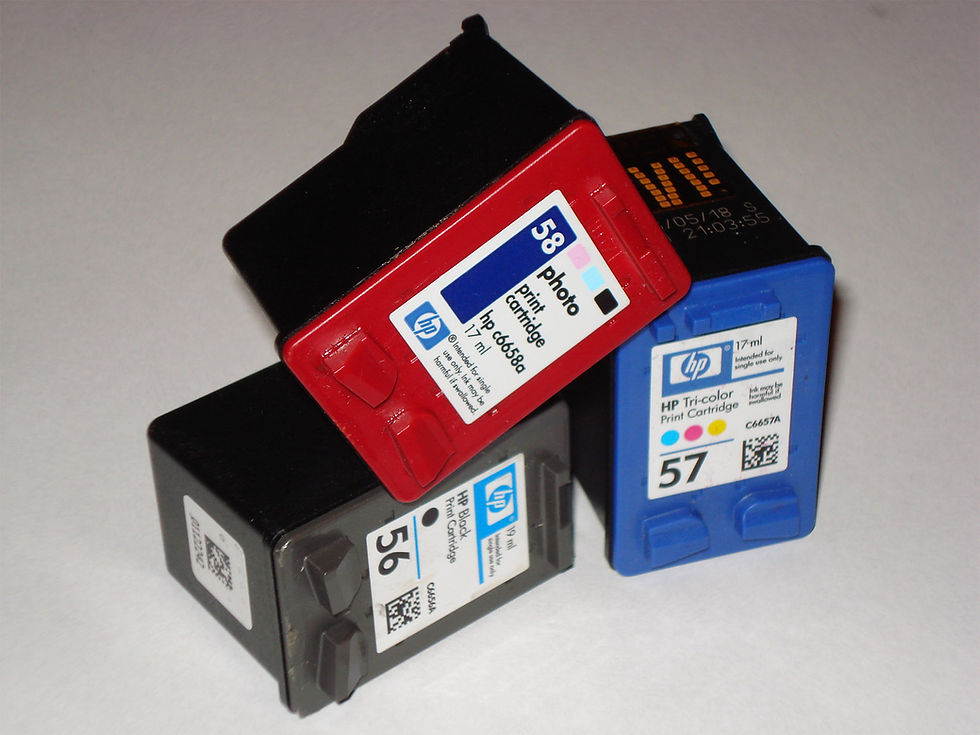
One customer reported paying $628.90 over approximately 11 years while receiving the original set of cartridges and one replacement set. After canceling, the customer said, HP disabled cartridges that still held usable ink, a restriction the customer said had not been clearly disclosed at enrollment. Complaints filed in August illustrate other ways the subscription can affect printing. On Aug. 3, a customer on a $5.99, 50-page monthly plan wrote that HP shut off printing after a payment failed, even though, the customer said, an HP supervisor acknowledged that only 37 of the plan's 50 pages had been used. The terms allow HP to stop subscription cartridges when it cannot collect payment. Six days later, another customer wrote that the printer would not print after the ink subscription was canceled and that the customer had not known printing depended on a subscription. After HP asked for the printer's serial number, the customer told the BBB the resolution was satisfactory.
HP has answered such complaints by pointing to the contract. In a written response in the BBB's public file, the company said subscription cartridges are remotely disabled under the terms customers accept at enrollment, that canceling does not disable the printer and that customers can keep printing by installing HP cartridges bought at retail. HP added that it "regrets any misunderstanding regarding how the Instant Ink program operates." Life News Today reached out to HP for comment but did not receive a response in time for publication.

The dispute has twice reached federal court. Radek Barnert, a New York subscriber, filed a proposed class action against HP in the U.S. District Court for the Northern District of California on July 6, 2021. Much of his complaint concerned delivery delays and error messages that he said left his printer unusable for about 35 days. It also argued that HP's promise of cancellation at any time, at no extra cost, implied that customers could keep using ink already supplied, and that canceling left subscribers "effectively required to pay twice for one ink cartridge." U.S. Magistrate Judge Susan van Keulen dismissed the original complaint in December 2021 with permission to amend, and in February 2023 the parties reported a settlement, without any ruling that HP's cartridge policy was unlawful.
Donald Hall, a California lawyer, sued HP in the U.S. District Court for the Central District of California in November 2024. According to HP's summary of his amended complaint, Hall canceled around Nov. 17, 2023; on Dec. 16, he says, HP disabled his cartridges with the familiar message, and he re-enrolled to keep printing. HP argued that its terms had warned Hall the cartridges would be disabled and that his printer and cartridges were never physically damaged. The court dismissed the case in June 2025, finding that the agreement disclosed HP's right to disable the cartridges and that Hall had noticed he would need replacements after canceling. That ruling favored HP on the disclosures presented to Hall; it did not decide how other customers were shown the terms. Hall filed an appeal with the 9th U.S. Circuit Court of Appeals on July 22, 2025.

The result is an unusual relationship between a customer and a printer in a home or office. The customer owns the printer, but while it participates in Instant Ink, HP keeps an internet connection that monitors aspects of its operation and can determine remotely whether subscription cartridges may keep printing. HP discloses those powers in its Terms of Service, and it maintains that cancellation does not disable the printer itself. Neither the complaints nor the court cases examined for this story establish that Instant Ink is illegal. But they expose the distinction at the center of the dispute between owning a printer and subscribing to the ink inside it. The subscription is over, the printer still works and the cartridge still holds ink, but HP can prevent it from printing.
Written by
Alexander Fernandez, Investigative Journalist
Life News Today


Comments